|
* For example, POITRA created and maintained the public information websites for the Southeast Corridor MIS (TREX), the North Metro Major Investment Study (MIS) and the US36 Corridor MIS beginning in 1998. The North Metro Corridor Environmental Impact Statement (EIS) is part of the Regional Transportation District's (RTD) new FasTracks Project, which is advancing several corridors to the design phase.
|

|
home | photosimulation & design viz | walls & landscaping | north metro corridor at 68th avenue |
|
North Metro Corridor at 68th Avenue
Photosimulations
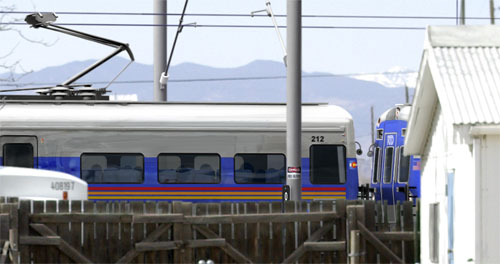
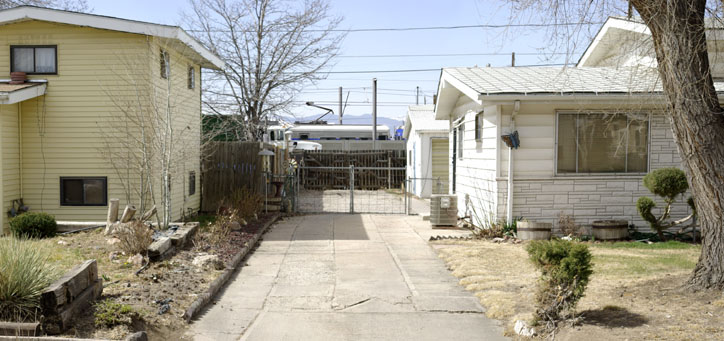
RTD FasTracks, Denver, Colorado The North Metro Corridor is one of several proposed transit corridors in the Denver Regional Transportation District's (RTD) FasTracks program that have been evaluated throughout the Metro area as Environmental Impact Statements (EIS). Most of the corridors originate in downtown Denver's Union Terminal (DUT) and radiate out to the suburbs. POITRA has provided several types of services on nearly all of these corridors at some point in their long histories.* The North Metro Corridor takes advantage of abandoned or little used frieght rail corridors that served Denver's northern suburbs. Because of the length of the line and possible interaction with commercial freight rail a heavy commuter rail concept was proposed. Both Electric Multiple Units (EMU) and Diesel Multiple Units (DMU) were evaluated. As part of the NEPA 4f evaluation some neighborhoods older than fifty years and in close proximity to the existing freight right-of-way and the proposed North Metro Corridor needed to be evaluated. One such location was on Albion Way near 68th Avenue. Colorado Boulevard, a major road runs behind the houses and the proposed North Metro Corridor just beyond that. |


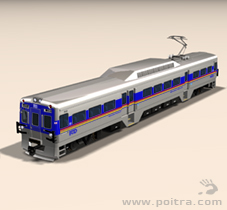

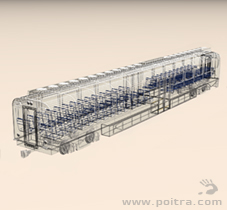


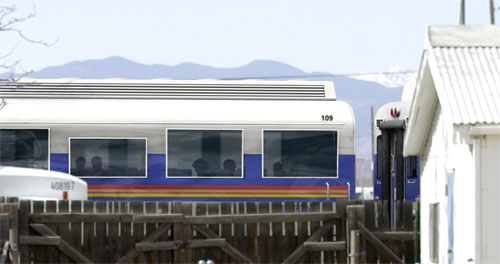
POITRA artists created custom 3D models of the DMU and EMU commuter vehicles. Potential RTD colors and marking combinations were developed uniquely for both by POITRA. |
| ||||||||||||||||||||||||||||||||||||||||||||||||||||||||||||||||||||||||||
|
| |||||||||||||||||||||||||||||||||||||||||||||||||||||||||||||||||||||||||


|
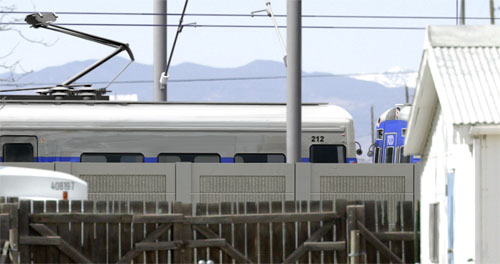
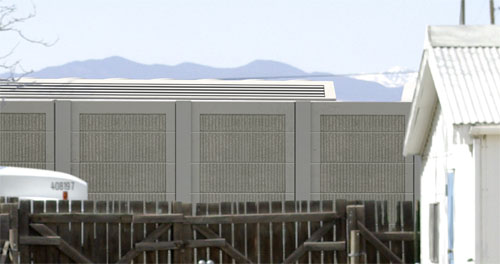
Photo-simulations proved to be the best medium for accurate evaluation and for confident presentation to public. Many factors would potentially affect this location. DMU and EMU vehicles have different height profiles; EMU have the additional hardware of a catenary system adding to the visual, DMU are louder and the noise source higher on the vehicle, which translates to taller sound barriers if barriers are required.
The simulation would reflect all of these variations including images with and without walls and with and without the POITRA model transit vehicles to show how the momentary presence of the vehicles affects the view impact. POITRA artists prepared the base photograph to recieve the elements of the proposed corridor using traditional digital painting techniques. This included separating foreground elements such as the houses and fences from the background material. Accurate 3D site models were built to include the rail corridor with the elements associated with each of the alternative commuter rail vehicle types. The models included the sound walls appropriate to each alternative and the appropriate POITRA model RTD commuter rail vehicle. The past sound wall design experience of POITRA principals helped to create plausable wall structures since the Engineer's conceptual design did not included that level of detail. The model was camera matched, lighted, rendered and composited with the selected POITRA survey photograph in numerous different combinations to cover all the possible conditions. A simulation was created for each of the situations to be studied.
The finished simulations were used in meetings with Fastracks public stakeholders, on the project website, in newsletters and in the EIS document. |
Take a closer look! The highly developed skills of the Artists at POITRA Visual make your concept a reality. (click to magnify) | |||||||||||||||||||||||||||
 Poitra Visual's illustrations of bridges, catenary systems, additional railroad track and sound walls reassured the public that this new transit service could be an attractive addition to their communities.”